
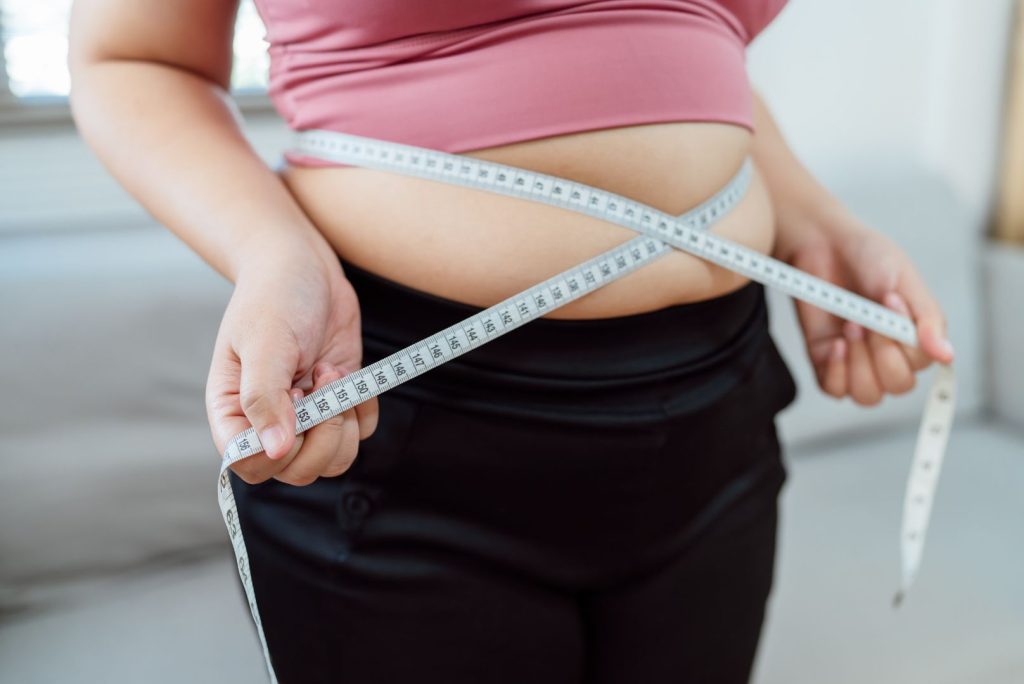
If you’re over 40 and your belly feels different, you’re not imagining it.
You’re eating and moving about the same as before. You haven’t developed a midnight donut habit (or not enough to explain this). Yet, your midsection feels softer, thicker, and more stubborn.
This quiet change, especially in your stomach, is often less about willpower and more about hormone imbalance and weight gain.
Once you understand what’s happening with your hormones, the frustration starts to make more sense. When things make sense, it feels less personal, less like failure, and more like biology.
When Weight Gain Feels Different
There’s a type of weight gain that sneaks up gradually. And then there’s the kind that seems like it happened in a season.
One year, your jeans fit. Next, the waistband feels tight by mid-afternoon.
Many women describe it the same way: “It’s not that I’m eating more. It’s just all going to my belly.”
That’s the clue.
When fat starts to move from your hips and thighs to your abdomen, it’s often linked to changes in specific hormones. For example, estrogen helps direct fat storage to the hips and thighs, but when estrogen levels fall, the body tends to move fat storage toward the abdomen. Cortisol and insulin also influence where fat accumulates by affecting how your body processes stress and carbohydrates. Thyroid hormones help regulate overall metabolism and energy use, which, in turn, affects where and how fat is stored.
After 40, those hormones start to work differently.
What Hormone Imbalance Really Means (No, You’re Not Broken)
We use the phrase “hormone imbalance” a lot. Sometimes too loosely.
Hormones are chemical messengers. They tell your body when to store energy, when to burn it, when to sleep, when to wake, when to reproduce, and when to conserve.
They’re not fixed. Hormones change every day, month, and season. During perimenopause and menopause, these changes become less predictable and sometimes stronger.
Estrogen rises and falls in uneven waves. Progesterone often declines first. Cortisol becomes more reactive. Insulin sensitivity shifts. Thyroid function can slow subtly.
So when we talk about hormone imbalance, weight gain, and belly fat, we’re really talking about a problem with how your body’s signals are working. What once felt smooth now feels uneven.
It’s not that your body has stopped working. It’s just working in a new way now.
Why Belly Fat? Let’s Talk Estrogen
Estrogen plays a quiet but powerful role in fat distribution.
Before midlife, estrogen tends to encourage fat storage in the hips and thighs. It’s protective. Evolutionary. It supports fertility.
As estrogen drops or changes a lot, the body starts to store more fat around the abdomen.
This isn’t cosmetic. It’s metabolic.
Abdominal fat is more metabolically active and more responsive to hormones such as insulin and cortisol. Higher levels of insulin or cortisol can increase fat storage in this area, and this type of fat can also promote inflammation. Therefore, as hormones shift with age, the way fat is distributed and its behavior in your body changes, making abdominal fat different from the softer fat you may have carried in your 20s.
If weight gain is mainly in your lower belly, estrogen changes are a common cause. This is a frequent hormone-driven pattern.
No amount of crunches can change how hormones move fat around. Strength training and good nutrition help, but trying to lose fat from just one area is mostly a myth.
Cortisol: The Stress Belly Conversation
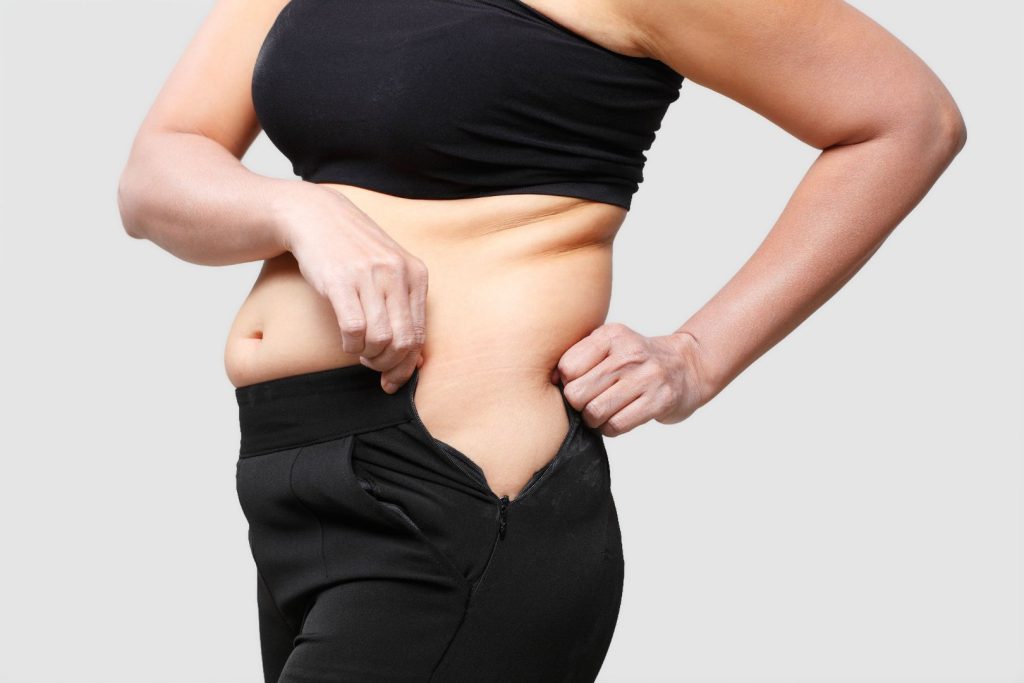
Now, let’s bring cortisol into the picture.
Cortisol is your primary stress hormone. It’s essential. It helps you wake up in the morning and respond to challenges.
But ongoing stress from work, caregiving, poor sleep, or emotional strain keeps cortisol high. High cortisol encourages fat to build up around the abdomen.
It’s not a character flaw. It’s survival biology.
The body stores energy centrally during prolonged stress because it perceives a threat. That “stress belly” isn’t laziness. It’s a defensive mechanism.
If you want a deeper look at how cortisol shapes overall hormone health, I break it down in The Role of Cortisol in Hormone Health. It’s eye-opening to see how closely stress and metabolism are connected.
Extreme dieting and excessive cardio can further raise cortisol levels. Pushing harder can make your body resist.
It feels unfair. It is unfair. But it’s predictable once you understand the physiology.
Insulin and the Blood Sugar Loop
Insulin deserves more airtime in midlife conversations.
As estrogen drops, your body often becomes less sensitive to insulin. This means you don’t process carbohydrates the way you used to.
You might notice:
- Stronger sugar cravings
- Afternoon energy drops
- Feeling shaky if you skip meals
- Weight gain that feels tied to carbs
This doesn’t mean carbs are evil. It means blood sugar stability matters more now.
When insulin stays high because of frequent snacking, eating lots of refined carbs, or stress, your body stores more fat, especially around the belly.
That’s why foundational nutrition shifts can make such a difference. In Foods That Help Balance Hormones Naturally, I talk about protein, fiber, and healthy fats not as trendy diet rules but as blood sugar stabilizers.
When you keep your blood sugar steady, you also keep insulin steady. This reduces the likelihood of belly fat building up.
It’s not glamorous advice. But it works.
Progesterone, Bloating, and “Is This Fat or Water?”
Progesterone often declines earlier in perimenopause than estrogen.
Lower progesterone can lead to:
- Increased water retention
- Breast tenderness
- Mood changes
- A sense of puffiness
Sometimes what feels like rapid weight gain is partly fluid shifts.
You wake up feeling flatter. By evening, you feel swollen.
These changes can be hormone-related, not failures in diet or effort.
And yes, it can be maddening.
Thyroid: The Quiet Metabolic Regulator
Let’s not ignore the thyroid.
Thyroid hormones regulate metabolic rate. Slight changes can change energy, digestion, and weight stability.
Signs that thyroid may be part of your hormone imbalance, weight gain, and belly fat pattern include:
- Cold intolerance
- Thinning hair
- Persistent fatigue
- Slowed digestion
- Unexplained weight gain despite unchanging habits
If you have these symptoms, it’s worth getting tested. A simple blood test can give you answers, and knowing what’s going on helps you take action.
Why Dieting Harder Often Backfires After 40
Here’s the paradox.
When weight increases, the instinct is to eat less and exercise more.
But eating too little can slow down your thyroid and raise your cortisol. Exercising too much without enough rest can also increase stress hormones.
Your body sees extreme dieting as a sign that food is scarce, so it tries to conserve energy.
You eat less, move more, and still feel stuck.
Honestly, it can feel like betrayal.
But your body isn’t sabotaging you. It’s protecting you.
After 40, metabolic health responds better to steadiness than extremes. That means regular meals, resistance training, adequate sleep, and nervous system support.
This might sound simple. It’s not always easy, but it is something you can keep up over time.
So What Actually Helps?
Let’s ground this in practical strategy.
1. Prioritize Protein at Every Meal
Aim for 25–35 grams per meal. Protein supports muscle, stabilizes blood sugar, and improves insulin sensitivity.
Greek yogurt. Eggs. Lentils. Salmon. Chicken. Tofu. It doesn’t have to be complicated.
2. Lift Weights
Strength training improves insulin response and supports lean muscle. Muscle tissue burns more energy at rest.
You don’t need CrossFit unless you love it. Two to three sessions per week of progressive resistance make a measurable difference.
3. Protect Sleep Like It’s Medicine
Because it is.
Sleep deprivation increases cortisol and disrupts insulin sensitivity. Seven to nine hours is ideal. Even improving from five to six helps.
4. Manage Stress in Realistic Ways
This isn’t about quitting your job and moving to Bali.
It’s about nervous system support: walking outdoors, breathwork, journaling, prayer, and a quiet moment before bed. Small daily resets.
In Daily Habits to Balance Hormones Naturally, I outline routines that compound over time. It’s the daily rhythm that shifts hormones—not occasional intensity.
5. Eat Fiber-Rich Plants
Cruciferous vegetables like broccoli, Brussels sprouts, and cauliflower support estrogen metabolism.
Gut health matters more than most people realize. Estrogen is processed through the liver and gut. If digestion is sluggish, hormones can recirculate.
Everything in your body is connected, in ways that can be both helpful and sometimes frustrating.
What Progress Actually Looks Like
This is important.
Hormonal weight loss rarely looks dramatic.
It often begins with:
- Better energy
- Fewer cravings
- Improved sleep
- Less afternoon crash
- Inches lost before the scale’s weight drops
The scale might not move at first while your body is changing—building muscle, lowering inflammation, and shifting fluids.
And then, slowly, the midsection softens.
Consistency outperforms intensity every time here.
When to Seek Medical Support
If you experience:
- Rapid unexplained weight gain
- Severe fatigue
- Hair thinning
- Depression
- Major cycle changes
- Strong family history of thyroid or metabolic disorders
See your provider. Ask for comprehensive labs.
Taking care of yourself is important, and sometimes you also need medical help. These two things can work together.
The Emotional Layer We Don’t Talk About
Let’s pause for a second.
Weight gain in midlife isn’t purely physical. It can stir identity questions.
You recognize your face. But your body seems unfamiliar.
That can be unsettling.
Especially in a culture that glorifies youth and equates thinness with worth.
But here’s the reframe.
Your body is adapting. It’s not getting worse; it’s just changing its focus. Reproductive hormones slow down, your stress response changes, and your metabolism adjusts.
You’re not broken.
You’re evolving.
And while hormone imbalance, weight gain, and belly fat can feel discouraging, it’s also a signal. A move toward slower rhythms, smarter strength training, steadier nutrition, and deeper rest.
It’s not punishment. It’s your body realigning itself. Sometimes, that’s the best way to describe it.
The Bigger Picture
Midlife health isn’t about chasing your 25-year-old body.
It’s about metabolic stability. Bone strength. Brain clarity. Emotional steadiness.
When your hormones are balanced, your weight often becomes more stable as a result, even if that’s not your main goal.
So if you’re staring at your midsection wondering what changed, know this:
It’s not random.
It’s not laziness.
It’s not failure.
It’s not laziness.
It’s not failure.
It’s physiology.
And physiology responds to patience.
Start by eating enough protein. Do some strength training. Try to get more sleep than you think you need. Take deep breaths. Eat vegetables, even if they aren’t exciting.
Small shifts. Repeated.
That’s how hormone imbalance, weight gain, and belly fat begin to soften.
Not overnight.
But steadily.
And steadily is enough.