

There’s a particular kind of quiet that settles in when you start thinking about fertility after 35.
It’s not panic. Not always. It’s more like a low hum in the background. A subtle awareness that time is moving. That your body may not respond the way it did at 27. The conversations with your OB-GYN sound slightly different now.
If you’re here because you’re wondering about hormone imbalance and fertility in women over 35, let me say this first: you are not behind. You are not broken. And your body is not “failing.”
But it is changing.
And understanding those changes calmly and clearly, without fear, can make all the difference.
First, Let’s Reset the Narrative Around 35
Thirty-five gets treated like a cliff. As if something dramatic happens the morning of your birthday.
It doesn’t.
Fertility declines gradually, not overnight. What shifts after 35 is more about subtle hormonal rhythms than a dramatic shutdown. Egg quantity decreases. Egg quality slowly declines. Ovulation can become slightly less predictable.
But many women conceive naturally after 35. Many after 40.
The real issue isn’t just age. It’s hormone stability.
When we talk about hormone imbalance and fertility in women over 35, we’re really talking about whether your body is ovulating consistently, producing enough progesterone, and maintaining a stable internal environment.
And that’s something we can influence.
What Actually Changes in Your Hormones After 35
Here’s the biology, simplified but not sugarcoated.
Ovarian Reserve Gradually Declines
You’re born with all your eggs. By your mid-30s, both the number and quality begin to decline more noticeably. That’s normal.
But ovarian reserve isn’t the same thing as immediate infertility. It’s more like a savings account that’s slowly decreasing, not suddenly empty.
Two lab markers often come up:
- AMH (Anti-Müllerian Hormone) measures egg supply.
- FSH (Follicle-Stimulating Hormone) can rise as the ovaries work harder.
These numbers provide information. They don’t provide destiny.
I’ve seen women fixate on AMH levels the way accountants fixate on quarterly earnings. Data matters. But context matters more.
Estrogen and Progesterone Become Less Predictable
After 35, especially approaching 40, cycles can change.
Ovulation may happen later. Luteal phases (the second half of your cycle) may shorten. Progesterone production may dip. And progesterone is the hormone that supports implantation.
Low progesterone doesn’t always prevent conception — but it can make maintaining early pregnancy harder.
This is why hormone imbalance and fertility issues in women over 35 often revolve around one quiet hormone: progesterone.
If ovulation is weak, progesterone is weak. And if progesterone is weak, implantation support weakens.
It’s a chain reaction.
Stress Hormones Start Playing a Bigger Role
Cortisol, your stress hormone, competes with reproductive hormones.
You know what? This matters more than most women realize.
In your 20s, you could push through stress, sleep deprivation, travel, high-intensity workouts, and your cycle still ran like clockwork.
After 35? Your nervous system becomes less forgiving.
Chronic stress can:
- Suppress ovulation
- Delay ovulation
- Reduce progesterone output
- Disrupt thyroid function
It’s not dramatic. It’s subtle. But subtle shifts compound.
And for women over 40, this interplay becomes even more significant. That’s why I go deeper into those shifts in Hormone Imbalance After 40.
How Hormone Imbalance Affects Fertility
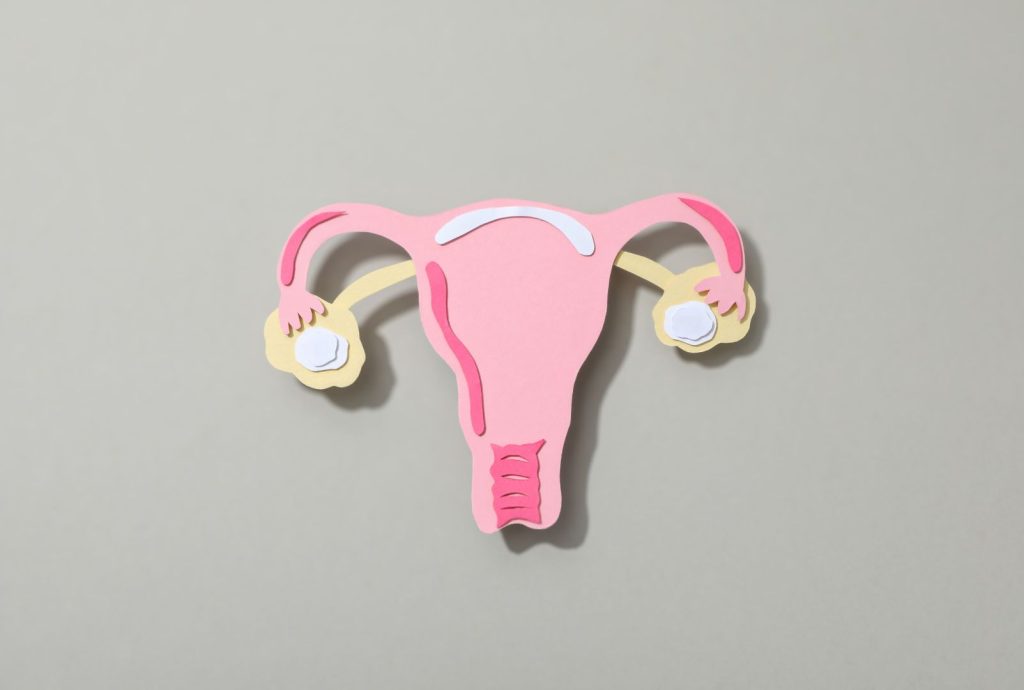
Let me explain this in plain terms.
Pregnancy requires three basic things:
- A healthy egg
- Ovulation
- A stable uterine lining supported by progesterone
Hormone imbalance interferes with one or more of these.
Irregular Ovulation
If cycles stretch beyond 35 days or shorten to less than 24 or 26 days, ovulation may be inconsistent.
No ovulation = no egg release.
And sometimes cycles appear regular, but ovulation is weak. This is called a luteal phase defect, where the lining doesn’t build thick enough to support implantation.
Thyroid Disruption
Even mild thyroid dysfunction can interfere with fertility.
Subclinical hypothyroidism (often missed) may:
- Shorten the luteal phase
- Increase miscarriage risk
- Affect ovulation quality
Women over 35 are more likely to experience subtle thyroid shifts, especially if there’s an autoimmune history.
Blood Sugar Instability
This one gets overlooked.
When blood sugar spikes and crashes repeatedly, insulin levels rise. Elevated insulin can interfere with ovulation and increase inflammation.
This is one reason nutrition plays such a powerful role in hormone balance.
Which brings me to something practical.
Signs Your Hormones May Be Interfering With Fertility
These aren’t always dramatic. In fact, they’re often quiet.
- Cycles shorter than 26 days
- Cycles longer than 35 days
- Spotting before your period
- Intense PMS that feels new
- Worsening anxiety
- Mid-cycle pain that never used to happen
- Sleep disruption
- Low libido
Sometimes women say, “I just don’t feel like my cycle is as strong as it used to be.”
That’s not unscientific. That’s intuition.
And it’s often right.
When to Test — And What Actually Matters
For women under 35, doctors often say try for a year before testing. For women over 35, the recommendation shifts to six months.
Testing may include:
- AMH
- FSH
- Estradiol
- Progesterone (7 days after ovulation)
- Full thyroid panel
- Prolactin
Here’s the part no one says enough: timing matters.
Progesterone must be tested during the middle of the luteal phase, not just on cycle day 21 if you ovulate later. Cycle tracking apps like Natural Cycles or even simple basal body temperature charts can help identify ovulation more precisely.
Testing is information gathering. Not a verdict.
Can You Improve Hormone Balance After 35?
Yes.
Not perfectly. Not magically. But meaningfully.
Stabilize Blood Sugar
Protein at breakfast. Fiber at every meal. Balanced plates.
If your mornings start with coffee and a pastry, as many of us have done, you’re likely spiking cortisol and insulin before 9 a.m.
Start with:
- 25 to 30 grams of protein
- Healthy fats
- Slow carbohydrates
It sounds simple because it is. But consistency changes hormone signaling.
Protect Your Luteal Phase
Ovulation quality determines progesterone output.
Support ovulation by:
- Reducing overtraining
- Prioritizing sleep
- Managing stress
- Avoiding extreme calorie restriction
This is not the time for intense bootcamp-style “shred” programs. Fertility requires signals of safety. Your body must feel secure.
Sometimes that means walking more and HIIT less. Sometimes it means eating more than you think you should.
I know. That can feel counterintuitive.
Consider Your Birth Control History
If you recently stopped hormonal contraception, your cycle may need time to regulate.
Some women bounce back immediately. Others need several months for ovulation to normalize.
If that’s you, read Resetting Hormones After Birth Control. It explains what’s normal and what’s not.
Hormone suppression takes time to recalibrate.
Nutrition That Supports Fertility

Food doesn’t guarantee pregnancy. But it absolutely influences hormone signaling.
Focus on:
- Omega-3 fats (wild salmon, sardines, chia)
- Iron-rich foods (grass-fed beef, lentils)
- B vitamins (eggs, leafy greens)
- Magnesium (pumpkin seeds, dark chocolate)
- Adequate protein
If you want a full breakdown, I outline specifics in Foods That Help Balance Hormones Naturally.
And yes, quality matters. Choose organic when possible and grass-fed if you can. But don’t let the idea of perfection stop you. Progress is what counts.
Fertility After 40 — A Slightly Different Conversation
For women in their early 40s, hormone imbalance and fertility issues in women over 35 shift into a more layered discussion.
Egg quality becomes more influential. Perimenopause may begin. Cycle irregularity increases.
But ovulation still happens.
I’ve seen women assume irregular cycles mean zero fertility. That’s not accurate. Irregular does not equal impossible.
It simply means ovulation timing requires closer tracking.
The Emotional Side No One Talks About
This part matters.
Trying to conceive after 35 often feels more mentally challenging. There’s comparison, pressure, and sometimes regret, even if you know your timing made sense.
And stress about fertility can, ironically, disrupt fertility.
So yes, hormone balance is biological.
But it’s also emotional.
Calming your nervous system is not just a trend. It’s real physiological support. Meditation apps, therapy, acupuncture, and journaling are not luxuries. They are tools that help regulate your body.
What Fertility After 35 Actually Looks Like
It looks less impulsive. More intentional.
It looks like tracking ovulation instead of guessing.
It looks like a protein-forward breakfast.
It looks like going to bed earlier than you did at 29.
It looks like respecting recovery days.
It may look slower. But slower isn’t worse.
Your body is not a ticking clock. It’s a system. Systems respond to stability.
A Balanced Perspective
Here’s the truth:
Age matters. Hormones matter. Lifestyle matters.
But fear doesn’t help.
If you’re concerned about hormone imbalance and fertility in women over 35, start with clarity:
- Track your cycle.
- Support blood sugar.
- Test strategically.
- Reduce chronic stress.
- Eat for hormone stability.
And then, just breathe.
You don’t need extreme protocols. You don’t need to panic. You need consistency.
Your body is adaptive. It’s intelligent. And in many cases, it responds beautifully when supported.
Fertility after 35 isn’t about perfection. It’s about rhythm.
And rhythm can be restored.